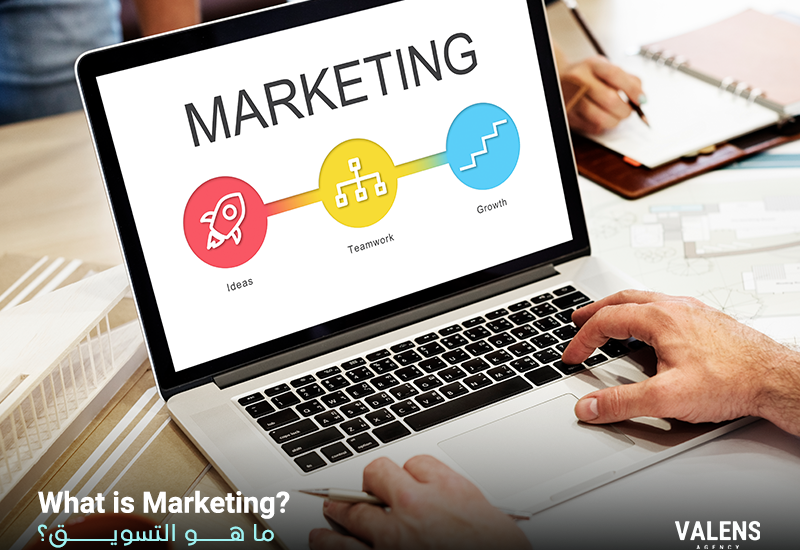
Marketing is how businesses understand their customers, communicate value, and create reasons for people to choose their products or services. It goes beyond advertising, covering research, positioning, branding, pricing, communication, and customer relationships. Understanding What is Marketing helps businesses make better decisions and build sustainable growth in competitive markets.
What Is Marketing?
So, What is Marketing in practical terms?
Marketing is the process of understanding a target audience, identifying its needs, creating an appropriate offer, communicating its value, and building relationships that encourage people to choose and continue using a product or service.
Advertising is part of marketing, but it is not marketing as a whole.
A business can advertise heavily and still struggle if its product does not meet customer needs, its pricing is unclear, its brand is difficult to understand, or its customer experience is poor.
Effective marketing connects these different elements.
For example, an online fashion brand may research what customers want, develop products around those preferences, establish a recognizable brand identity, price products competitively, promote them through social media and paid advertising, and use email marketing to encourage repeat purchases.
Every one of these activities contributes to the marketing process.
This is why marketing should be viewed as a business function rather than simply a promotional activity.

How Marketing Has Evolved Over Time
Marketing has changed considerably as technology, media, and consumer behavior have evolved.
Traditional marketing relied heavily on channels such as newspapers, magazines, television, radio, billboards, direct mail, and physical events. Businesses often communicated with large audiences through one-way messages.
The growth of the internet changed that relationship.
Customers gained access to more information, more choices, and more ways to communicate with brands. Businesses could also collect data about customer behavior and measure marketing performance more accurately.
Social media introduced another major shift. Customers could interact publicly with companies, share opinions, create content, and influence other buyers.
Today, marketing can be highly targeted and measurable. Businesses can reach specific audiences through search engines, social platforms, email, websites, and digital advertising while monitoring how people respond.
This evolution has also increased the importance of personalization and customer experience.
Modern marketing is no longer simply about getting a message in front of as many people as possible. It is increasingly about reaching the right people with relevant messages at the right stage of their decision-making process.
The 4Ps: The Main Elements of the Marketing Mix
One of the most widely recognized marketing frameworks is the 4Ps: Product, Price, Place, and Promotion.
Product
The product is what the business offers to customers. It could be a physical product, software, professional service, subscription, course, or another solution.
Good marketing starts with an offer that provides genuine value. Understanding the customer’s needs helps businesses develop products that solve relevant problems.
Price
Price influences both purchasing decisions and how customers perceive a brand.
A company needs to consider production costs, competitors, customer expectations, positioning, and overall business objectives when establishing its pricing strategy.
Place
Place refers to how and where customers can access the product.
For an eCommerce company, this could involve an online store and marketplaces. For a physical business, it may involve retail locations or distribution networks.
Today, businesses often combine physical and digital channels to make purchasing easier.
Promotion
Promotion includes the communication activities used to make customers aware of an offer and encourage them to take action.
This includes advertising, social media, content, email, public relations, search marketing, influencer partnerships, and other promotional methods.
The four elements work together. A strong promotion strategy cannot compensate for a product that customers do not want, while a good product may struggle if customers do not know it exists.
Why Marketing Matters for Business Growth?
Understanding What is Marketing becomes more valuable when we consider its role in business growth.
Marketing helps businesses identify potential customers, communicate their value proposition, differentiate themselves from competitors, and create demand.
It also supports brand awareness.
When customers repeatedly encounter consistent and useful messaging, they become more familiar with a company. Over time, that familiarity can contribute to trust and consideration.
Marketing also helps businesses learn.
Customer responses to campaigns, content, products, and offers can provide useful information about what people value. Companies can use this information to improve their products and marketing strategies.
For growing businesses, this feedback loop is particularly important. Marketing should not simply push messages outward. It should also help the company understand the market.
Traditional Marketing vs. Digital Marketing
Traditional and digital marketing share the same fundamental goal: connecting businesses with customers. The difference is mainly in the channels, tools, and ways businesses interact with audiences.
Traditional marketing includes television, radio, print advertising, outdoor advertising, direct mail, and offline events.
Digital marketing includes search engines, websites, social media, email, online advertising, content, and other digital channels.
One of the major advantages of digital marketing is measurability. Businesses can monitor impressions, clicks, conversions, leads, purchases, and other actions.
For companies that need specialized support, working with a digital marketing agency can provide access to expertise across multiple channels.
Digital marketing also allows businesses to test different audiences, messages, creatives, and offers more efficiently.
However, traditional marketing has not disappeared. Depending on the audience and business model, offline channels can still contribute to awareness and customer acquisition.
The most effective approach depends on the business rather than automatically choosing one channel over another.
Major Types of Marketing
Marketing includes many disciplines, and businesses often combine several depending on their goals.
Digital Marketing
Digital marketing uses online channels to attract, engage, and convert customers.
This can include SEO, paid advertising, social media, email, content, websites, and other digital activities.
Businesses looking for Digital Marketing Services for Businesses can use these channels to build visibility and reach customers at different stages of the buying journey.
Content Marketing
Content marketing focuses on creating useful and relevant information for a specific audience.
Content Marketing Services for Corporate audiences can include articles, guides, case studies, landing pages, videos, and other resources designed to educate customers and demonstrate expertise.
Content can also support SEO by helping businesses rank for relevant searches.
Experiential Marketing
Experiential marketing creates direct experiences that allow customers to interact with a brand.
Examples include events, product demonstrations, pop-up experiences, exhibitions, and interactive campaigns.
The objective is often to create a memorable connection that goes beyond a standard advertisement.
Direct Marketing
Direct marketing communicates directly with specific customers or prospects.
Email campaigns, SMS, direct mail, and targeted offers are common examples.
Because the communication is more direct, businesses can often personalize messages based on customer behavior, preferences, or previous interactions.
How Marketing Helps Attract and Retain Customers
Marketing does not end when someone discovers a business.
Customer acquisition is only one stage of the relationship. Businesses also need to provide reasons for customers to return.
This is where different marketing activities can work together.
SEO can attract people searching for solutions. Advertising can introduce products to new audiences. Content can answer questions and build credibility. Social media can maintain engagement, while email can support retention and repeat purchases.
For companies focused on measurable acquisition, Performance Marketing Services can connect marketing activities with commercial metrics such as conversions, customer acquisition costs, revenue, and return on advertising spend.
Valens also approaches email marketing as part of a broader customer journey, helping businesses communicate with existing customers rather than focusing entirely on acquiring new ones.
Branding plays a role here too. Strong Professional Branding Services can help businesses establish a recognizable identity and communicate consistently across customer touchpoints.
Why an Integrated Marketing Approach Matters
Modern customers rarely interact with a brand through only one channel.
Someone might discover a company through Google, visit its website, see a social media advertisement later, read a blog article, subscribe to an email list, and eventually make a purchase.
If each channel communicates something completely different, the customer experience can become confusing.
This is why businesses increasingly look for Integrated Marketing Solutions that connect different activities around a shared strategy.
An integrated approach can bring together SEO, paid advertising, content, social media, email, branding, and creative work.
For example, Valens combines performance creative with paid advertising to help brands develop advertising content based on testing and performance rather than creative preferences alone.
The same principle applies to search and content. SEO becomes more valuable when content is created around real customer needs and commercial opportunities.
Why Choose a Specialized Marketing Agency?
Not every business needs the same marketing strategy.
A local service provider may have different requirements from an eCommerce brand. A B2B company may have a longer sales cycle than a consumer business. A company entering a new market may need stronger branding and positioning before increasing its advertising spend.
This is where a Specialized Marketing Agency can provide additional value.
A specialized partner should understand the company’s industry, customer journey, competitive environment, and business objectives.
Businesses considering a Best Digital Marketing Agency should therefore look beyond the number of services listed on an agency website. Experience, strategic thinking, communication, measurement, and relevant case studies are often more important.
For companies that require broader support, Digital Marketing Consultancy can also help identify priorities before resources are allocated across multiple channels.
Marketing Strategy Development and Business Growth
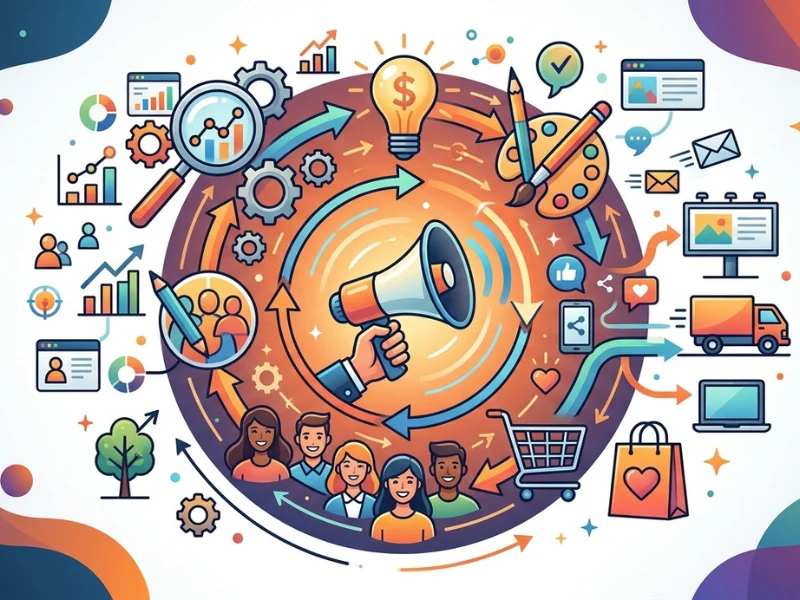
A successful marketing strategy starts with clear objectives.
A Marketing Strategy Development Company should be able to help define the audience, positioning, messaging, channels, budget, KPIs, and expected outcomes.
Valens also provides growth consulting for businesses that want to connect marketing decisions with broader growth considerations.
This matters because marketing does not operate separately from the rest of the business.
Increasing sales can affect inventory, cash flow, staffing, fulfillment, customer support, and profitability. A campaign that generates more orders is not necessarily successful if the economics do not work.
This is why a Results-Driven Marketing Agency should evaluate marketing performance within the context of the company’s broader objectives.
Examples of Marketing Strategies in the Arab Market
The Arab market includes diverse audiences, industries, and customer behaviors, making localized marketing particularly important.
A campaign targeting customers in the UAE, for example, may require different messaging, creative approaches, offers, or channels than a campaign targeting customers in another country.
Valens highlights several campaigns and results from the region. One example is its work with Total Egypt, where the company reports generating 732 million LE in total sales with a ROAS of 8.469.
The broader lesson is that effective marketing depends on strategy, creative execution, audience understanding, and performance measurement working together.
For businesses scaling in the region, the objective should not simply be to spend more on advertising. It should be to understand which marketing activities produce sustainable commercial results.
FAQ About Marketing
What is the main purpose of marketing?
The main purpose of marketing is to connect businesses with customers by understanding their needs, communicating value, creating demand, and supporting customer relationships.
Is advertising the same as marketing?
No. Advertising is one component of marketing. Marketing also includes research, product positioning, pricing, branding, content, customer experience, distribution, and relationship management.
What is the difference between marketing and digital marketing?
Marketing covers both online and offline activities. Digital marketing specifically focuses on digital channels such as search engines, websites, social media, email, and online advertising.
How much do marketing services cost?
Marketing Services Pricing varies according to the scope of work, business size, industry, channels, campaign objectives, and level of support required. There is no universal price for every business.
Are marketing packages suitable for small businesses?
Marketing Packages for SMEs can be useful when they are built around the company’s actual needs. Small businesses should avoid paying for services they do not need simply because they are included in a package.
Should a business hire an agency or build an internal team?
Both options can work. Businesses may Hire a Digital Marketing Agency when they need specialized expertise, additional capacity, or access to multiple marketing disciplines without building a large internal team.
What should businesses look for in a marketing agency?
Look for relevant industry experience, transparent communication, measurable objectives, strong case studies, strategic thinking, and an approach that connects marketing activity to business results.
So, What is Marketing? At its core, marketing is about understanding people, creating value, communicating that value, and building relationships that support business growth. It is much broader than advertising and increasingly relies on data, digital channels, creative strategy, and customer insight.
For businesses operating in competitive markets, the right marketing approach can bring these elements together through Integrated Marketing Solutions to Increase Sales, improve brand awareness, and build stronger customer relationships.
Valens combines strategy, creative, advertising, SEO, branding, email marketing, and growth consulting to help businesses approach marketing as a connected growth function. If you are looking for a Leading E-Marketing Company that focuses on performance and measurable outcomes, Valens Marketing can help you build a strategy aligned with your business goals.